
Effectiveness of Hydrolyzed Collagen Peptide Injection for the Treatment of Collateral Ligament Pain: A Randomized Controlled Trial
Authors: Binh Luu Thi1,2*, Lan Tran Thi3, Minh Hang Hoang Thi3
- 1Thai Nguyen Province Health Department, Vietnam
- 2Thai Nguyen University of Medicine and Pharmacy, Vietnam
- 3Thai Nguyen National Hospital, Vietnam
- * corresponding author
- Journal
- Journal of Clinical & Medical Surgery · Volume 3(2): 1127
- Published
- Received
- Accepted
- ISSN
- 2833-5465
- Trial registration
- NCT05971004 (opens in a new tab)
Version
Original English text of the study.
Source document
On this page
In brief
- 62 patients with collateral ligament pain persisting for at least 3 months and ultrasound evidence of inflammation were randomized: 31 received one hydrolyzed collagen peptide injection and 31 one depo-medrol injection plus glucosamine 1500 mg and Atrodar 50 mg for 3 months; both groups could receive oral painkillers for 3-7 days if pain was severe.
- The collagen peptide group showed significantly better VAS scores and WOMAC pain and physical function scores than the control group at both the 3-month and 6-month follow-up (p<0.05).
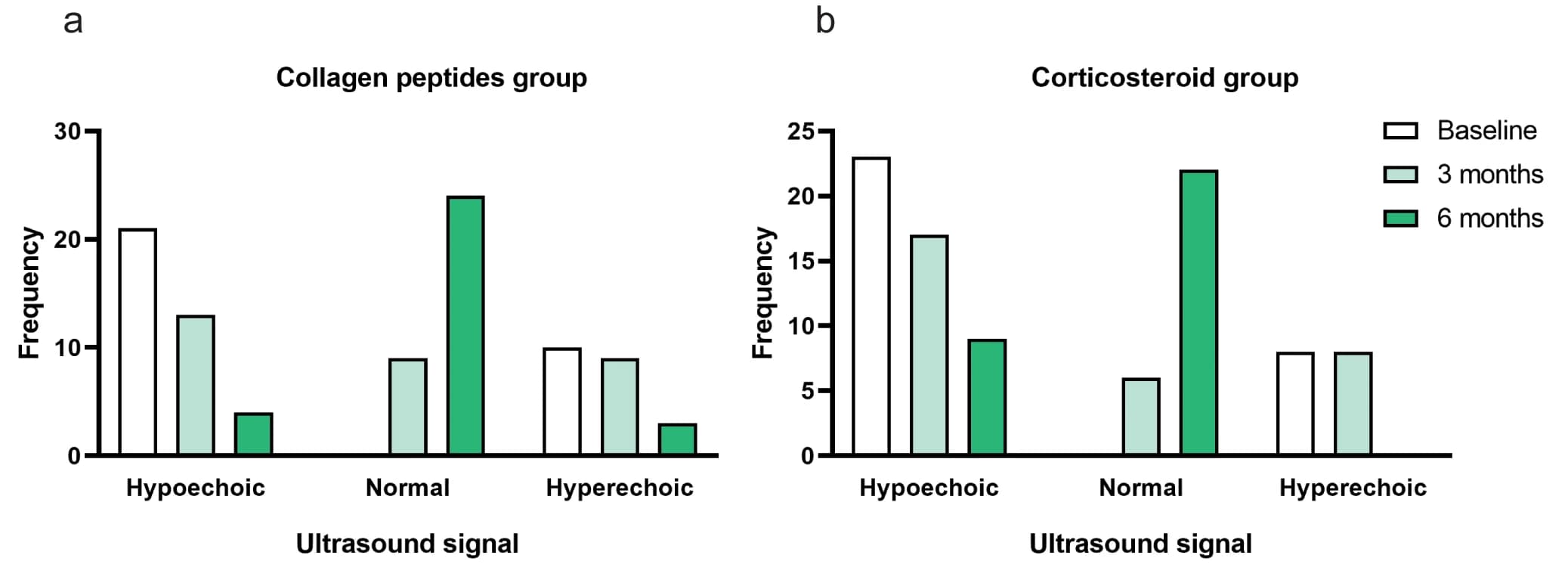
- WOMAC stiffness improved significantly in both groups with no significant difference between them (p>0.05); ligament lesions on ultrasound improved in both groups with no significant difference between the groups.
- At 6 months, 24 patients in the study group and 22 patients in the control group had normal ligament characteristics on ultrasound.
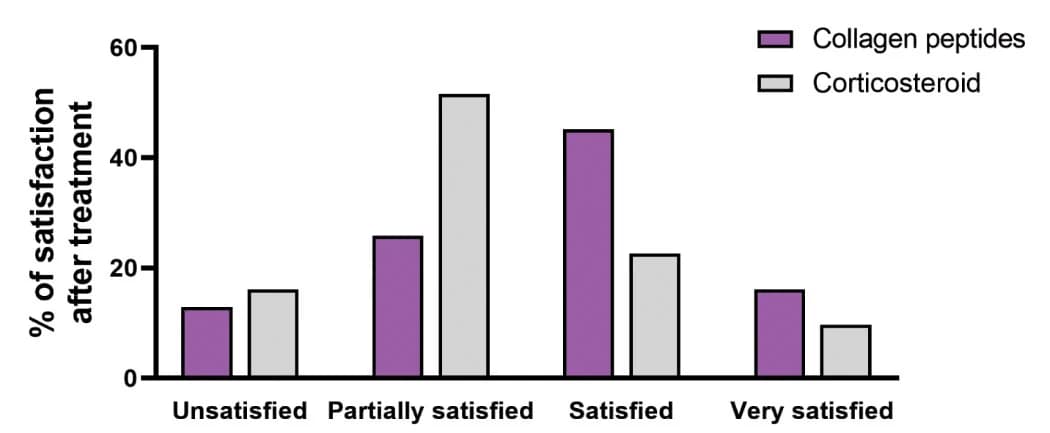
- The study group had a higher percentage of satisfied and very satisfied patients; no significant adverse events were reported in either group.
- patients enrolled
- 62
- study vs. control group
- 31 + 31
- follow-up
- 6 months
- level of evidence
- Level I
- Purpose
- Collateral ligament pain is a musculoskeletal condition causing knee inflammation, often affecting athletes. Despite various treatments being available, there is failure in addressing the pathophysiologic collagen degradation. Hydrolyzed collagen peptides may help damage tissues in the repairment process, but until now no data is available on local injection of collagen peptides, with data available only on oral supplementation.
- Methods
- A randomized controlled trial assessed the efficacy of hydrolyzed collagen peptide injections (Tiss’You, Republic of San Marino) for persistent collateral ligament pain. Sixty-two patients with ultrasound-confirmed inflammation were divided into two groups. The study group (31 patients) received oral painkillers and a collagen peptide injection, while the control group (31 patients) received oral painkillers and a depo-medrol injection.
- Results
- The study group showed significant improvement in pain relief, functional status, and quality of life, measured by the Visual Analogue Scale and Western Ontario and McMaster Universities Osteoarthritis Index (WOMAC) after six months. Ultrasound confirmed ligament healing in both groups with no observed differences. The study group reported higher satisfaction and no adverse effects.
- Conclusion
- Hydrolyzed collagen peptide injections may effectively and safely treat collateral ligament pain. This study offers insights into this novel emerging treatment option, exploiting the ability of collagen peptides in helping tissue repair. Further research with larger samples and longer follow-up is necessary to validate these findings.
Level of evidence: I (Randomized controlled trial).
Collateral ligament pain is a common musculoskeletal condition affecting active and athletic individuals characterized by inflammation and discomfort in the ligaments surrounding the knee. Both medial and lateral collateral ligaments are crucial stabilizers of the knee joint against varus stress. Pain, inflammation, and even injury can result from various forces, including rotational, varus, extension, and translational movements, from either direct or noncontact trauma 6. Isolated collateral ligament injury accounts for only 2% of knee injuries 10, and it is usually associated with lower-magnitude forces that result in lower-grade damage. Tennis and gymnastics carry a higher risk of LCL injury but can occur in any sporting activity 2. Patients with LCL injuries typically experience dull pain and may report a feeling of instability, especially during cutting activities.
Although collateral ligament inflammation typically has a benign course, it can easily recur, leading to complications such as ligament rupture and nerve compression. The management of this condition typically includes rest, rehabilitation physiotherapy, systemic and local analgesics, not-steroid anti-inflammatory drugs (NSAIDs), corticoids, and platelet-rich plasma 5. However, the use of NSAIDs is only effective for a short period and has adverse effects on the stomach, intestines, liver, and kidneys 6,5. Local cortico-steroid injections are a popular method for pain relief, but their fast-acting but short-duration effect can cause atrophy of subcutaneous adipose tissue, loss of skin pigmentation around the injection site, and ligament damage 13. Platelet-rich plasma therapy is an alternative treatment but has many contraindications, including for patients with blood diseases and high costs 9.
Recently, supplementation of hydrolyzed collagen peptides has emerged as a new trend for the treatment of acute and chronic musculoskeletal diseases 1. Collagen is the most abundant protein in the human body and provides structural support to various tissues, such as skin, bone, cartilage, and tendons. Collagen peptides are obtained through enzymatic hydrolysis of collagen, which breaks down the larger collagen molecules into smaller peptides. The size of the collagen peptides is an important characteristic, as it determines their bioavailability and absorption in the body 4. Collagen peptides have a molecular weight of less than 3,000 Daltons and have unique properties, including high biocompatibility and low immunogenicity 11. While oral ingestion has traditionally been the most common way of supplementing with collagen peptides, formulations for direct injection have been developed to overcome the limitation of absorption and distribution. This is particularly beneficial for treating localized conditions, such as joint pain, where topical application may be more effective than oral ingestion 3.
Collagen peptides exert their effects through complex mechanisms involving various pathways that are not yet fully understood. However, research suggests that collagen peptides can interact with multiple cell surface receptors, including integrins, DDRs, GPVI, OSCAR, and LRC. These interactions activate signaling pathways that play essential roles in cellular processes like proliferation, differentiation, migration, and survival. Binding of collagen to integrins on the cell surface triggers biochemical events, activating pathways such as focal adhesion kinase (FAK) and mitogen-activated protein kinase (MAPK). These pathways regulate important processes like cell proliferation, differentiation, survival, extracellular matrix remodeling, and collagen synthesis. Activation of integrins by collagen is crucial for stabilizing and regenerating connective tissues. Collagen peptides have demonstrated integrin activation in physiological conditions, contributing to the regulation of bone, cartilage, tendon, and muscle homeostasis 8. Indeed, supplementation of collagen peptides for the treatment of damaged tissue helps to replenish, regenerate, and repair damaged tissues, restoring the structure and function of that tissue 15 and injection administration may have greater effects than oral supplementation. Several studies using collagen-containing preparations for the treatment of connective tissues, e.g., tendons, have shown significant increases in tendon stiffness and muscle strength after 14 weeks of treatment, with no reported adverse effects 8.
Although various treatment options, such as corticosteroid and platelet-rich plasma injections, have been evaluated for the management of collateral ligament pain, there is a lack of systematic evaluation of the effectiveness of collagen peptides in treating this condition, especially for local administration though injection. Therefore, the present study aimed to evaluate the treatment outcomes after 6 months of peri-ligamentous collagen peptide injection in patients with collateral ligament pain persisting for at least 3 months with ultrasound evidence of inflammation of the femoral condyle attachment point. The study aimed to investigate the potential of injectable collagen peptide solution in promoting tissue regeneration and repair and to provide insights into the use of this emerging treatment option for the management of ligament injuries and inflammatory conditions.
The objective of this study was to evaluate the efficacy of injectable collagen peptides as an adjunct therapy to oral pain relievers and anti-inflammatory drugs in the treatment of collateral ligament pain persistent for 3 months in patients with ultrasound evidence of inflammation of the femoral condyle attachment point.
- Inclusion criteria
- Age above 18 years, lateral knee pain with a duration of 3 months or longer, ultrasound evidence of inflammation of the femoral condyle attachment point, and agreement to participate in the study.
- Exclusion criteria
- Trauma, infection, dermatitis at the site of the inflammation, damage to surrounding knee structures, history of chronic inflammatory arthritis (such as gout or rheumatoid arthritis), and local corticosteroid injection within 3 months before participating in the study.
This study was a randomized controlled trial and data was collected prospectively from study participants. A total of 62 patients who met the selection criteria were randomized into two groups: the study group (31 patients) received oral pain relievers (paracetamol and anti-inflammatory NSAIDs) for 3-7 days (if the pain was severe) and one injection of collagen peptide solution at the site of the inflamed ligament attachment point (femoral condyle). The control group (31 patients) received oral painkillers (paracetamol and anti-inflammatory NSAIDs) for 3-7 days (if the pain was severe) and one injection of depo-medrol at the site of inflamed ligament attachment point (femoral condyle), combined with oral slow-acting symptomatic drugs (glucosamine 1500 mg, atrodar 50 mg) for 3 consecutive months.
The authors used SPSS 18.0 to analyze the data. Independent-Sample T-Test was used to compare the average VAS score and WOMAC score between the study group and control group at the 3-month and 6-month follow-up. Crosstabs were used to evaluate ultrasound signals.
Clinical and subclinical data were obtained at the time before intervention (T0), including ultrasound assessment of the location of femoral condyle attachment points. Treatment outcomes were monitored and evaluated in both groups after 6 months of intervention at time T1 (after 3 months of treatment) and T2 (after 6 months). Pain level (assessed using the VAS scale and WOMAC score), ultrasound of the inflamed ligament, and patient satisfaction (rated using the Likert scale) were evaluated.
The study was approved by the ethics committee. All patient information was collected solely for research purposes, and patients participated voluntarily without any intervention that would harm them. Before participating in the study, the researcher clearly explained the study content and significance to the subjects. Professional ethics and attentive patient care were ensured throughout the study.
A total of 62 patients with lateral knee pain persisting for 3 months and ultrasound evidence of collateral ligament inflammation were included in the study, with 31 patients in the study group and 31 patients in the control group (Table 1). The mean age was 57.94±11.41 years in the study group and 57.94±14.5 years in the control group, with no significant difference between groups (p>0.05). Most patients were female, with 58.1% of patients in the study group and 64.5% of patients in the control group being women.
| Characteristic | Treatment group | Control group | Total |
|---|---|---|---|
| Age | |||
| <40 | 4 (12.9%) | 3 (9.7%) | 7 (11.2%) |
| 40-60 | 14 (45.2%) | 16 (51.6%) | 30 (48.4%) |
| >60 | 13 (41.9%) | 12 (38.7%) | 25 (40.3%) |
| Gender | |||
| Male | 13 (41.9%) | 11 (35.5%) | 24 (38.7%) |
| Female | 18 (58.1%) | 20 (64.5%) | 38 (61.3%) |
| Job | |||
| Manual labor | 10 (32.3%) | 15 (48.4%) | 25 (40.3%) |
| Mental labor | 21 (67.7%) | 16 (51.6%) | 37 (59.7%) |
| Frequency of movement | |||
| Play sports regularly | 17 (54.8%) | 16 (51.6%) | 33 (53.2%) |
| Don’t play sports regularly | 14 (45.2%) | 15 (48.4%) | 29 (46.8%) |
| Medical history | |||
| Diabetes | 5 (16.1%) | 8 (25.8%) | 13 (21.0%) |
| Kidney disease | 1 (3.2%) | 5 (16.1%) | 6 (9.7%) |
| Liver failure | 3 (9.7%) | 1 (3.2%) | 4 (6.5%) |
| No comorbidities | 22 (71%) | 17 (54.9%) | 39 (62.8%) |
The majority of research subjects were engaged in mental labor (59.7%), while 53.2% of patients reported playing sports regularly. Most patients had no comorbidities (62.9%). There was no significant difference in pre-treatment clinical characteristics or ultrasound lesions between the two study groups (p>0.05), indicating that the groups were comparable at baseline.
The study group showed a significant improvement in VAS scores compared to the control group at the 3-month follow-up (p<0.05). This improvement continued at the 6-month follow-up (Figure 1a), with a significant difference observed between the two groups (p<0.05) favoring the group treated with injectable collagen peptide solution.
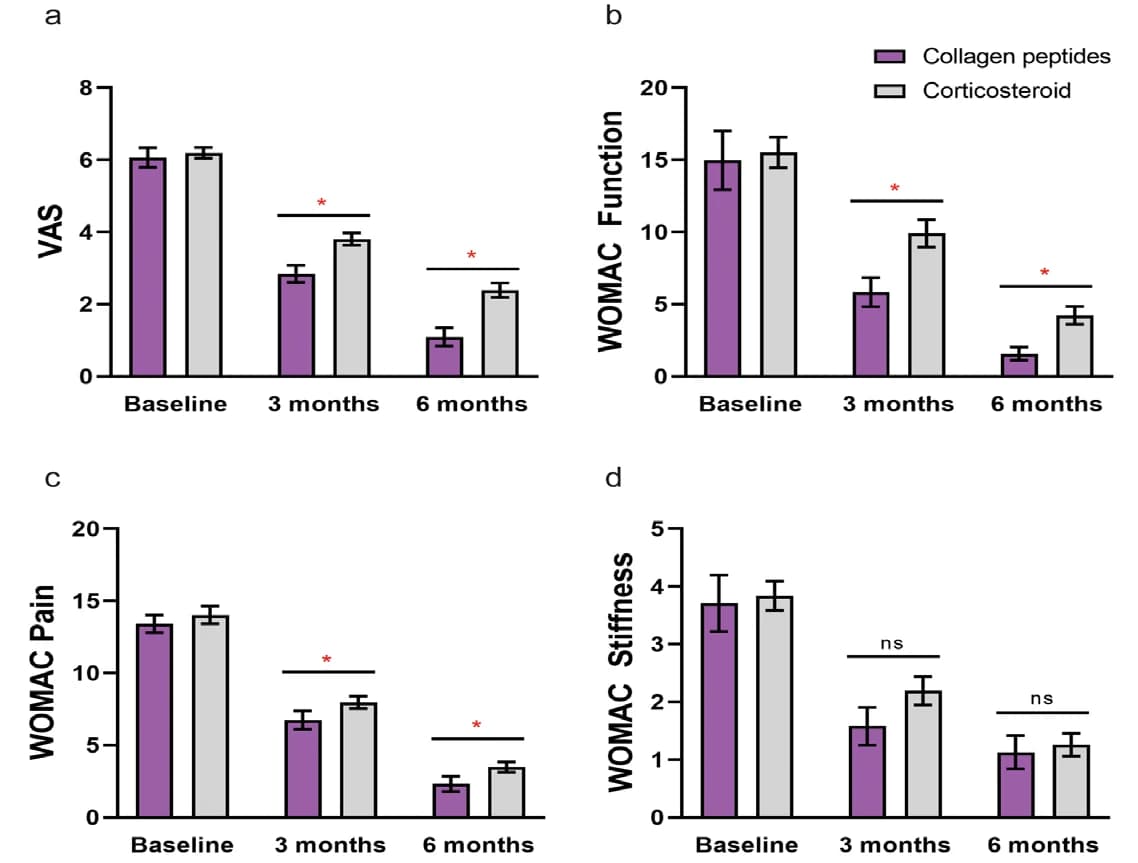
Regarding the WOMAC physical function score, the study group had a better improvement than the control group at both the 3-month and 6-month follow-up (p<0.05) (Figure 1b). Similarly, the study group showed better improvement in the WOMAC pain score at the 3-month and 6-month follow-up compared to the control group (p<0.05) (Figure 1c).
Both the study group and control group showed significant improvements in WOMAC Stiffness scores at the 3-month and 6-month follow-up (p<0.05) (Figure 1d). However, there was no significant difference in the comparison of stiffness scores between the two groups (p>0.05).
At the beginning of the study, all patients had evidence of inflammation of the ligament at the femoral condyle attachment point on ultrasound. At 3 and 6 months after treatment, both study groups showed an improvement in ligament lesions, with no significant difference between the groups at either time point (p>0.05) (Figure 2). Specifically, there were no normal ligaments at baseline, and at 6 months ultrasound assessments, 24 patients in the study group and 22 patients in the control group had normal ligament characteristics on ultrasound. Notably, there was no significant correlation between the improvement in ligament lesions on ultrasound and the clinical outcomes of VAS and WOMAC scores when comparing the two groups.
Patient satisfaction was assessed using a Likert scale. The study group had a higher percentage of satisfied and very satisfied patients than the control group (Figure 3). Few patients reported being unsatisfied with the treatment in both groups, and these were typically individuals who experienced little relief or still had pain symptoms. It is important to note that these patients often had underlying diseases.
There were no significant adverse events reported in either group during the study period.
The present study evaluated the efficacy of local hydrolyzed collagen peptide injection as a treatment option for collateral ligament pain. Our findings suggest that collagen peptide injection is an effective treatment for reducing pain and improving physical function in patients with persisting lateral pain with evidence of ligament inflammation at the femoral condyle attachment point. These benefits were observed as early as three months after treatment and continued up to the six-month follow-up visit.
Injectable formulas of hydrolyzed collagen peptides are novel biomaterials and bio-medical devices that exploit the benefits of collagen peptides supplementation 1,11,15 without the limitation of absorption and distribution. The regenerative effects of collagen peptides may explain the observed improvements in pain and physical function scores in the study group. Previous studies suggest that collagen peptides can promote connective tissue regeneration by enhancing cellular proliferation and migration, promoting angiogenesis, and increasing the synthesis of extracellular matrix components. These activities are mediated by multiple receptors, in particular integrins 4. However, it is worth noting that we did not observe any significant differences in ultrasound lesions between the two groups, despite the clinical improvement observed in the study group. This may suggest that the benefits of collagen peptide injection may not be solely due to structural changes in the ligament, but rather to other factors such as modulation of pain or inflammation. Indeed, oral supplementation with hydrolyzed collagen has demonstrated efficacy in improving osteoarthritis by stimulating collagen synthesis, reducing MMP13 production, and preventing apoptosis 7.
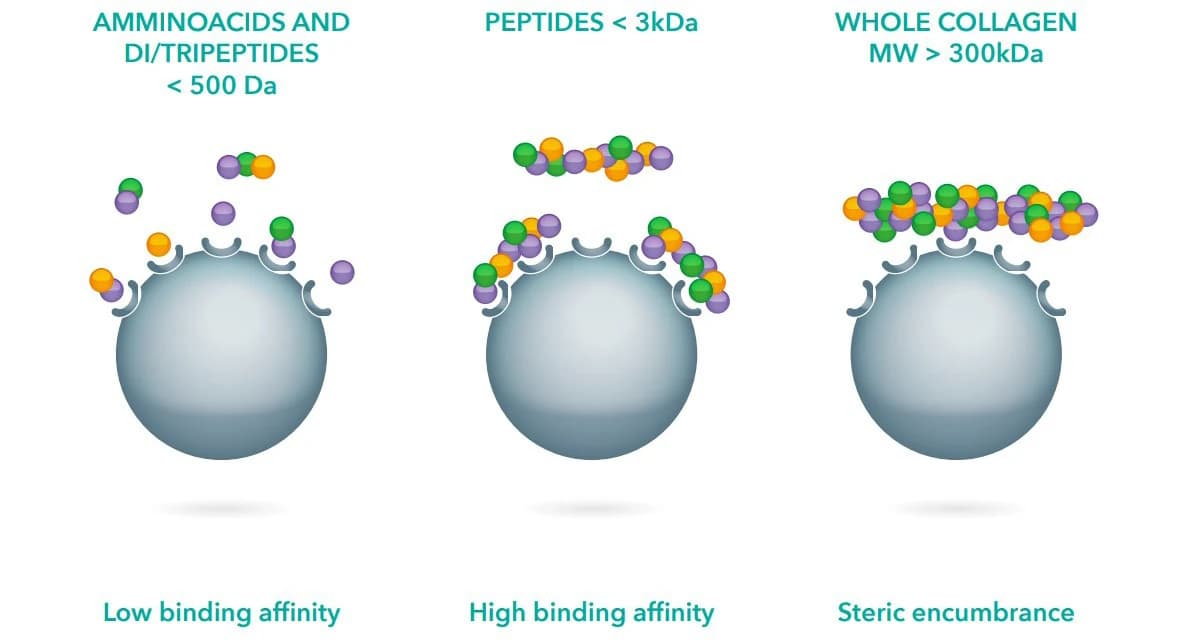
Design of biomaterials based on injectable collagen already provided proof of concept in previous studies. For example, porcine-derived collagen was used to treat myofascial pain reducing symptoms better than local anesthetic 14. However, these collagen formulations were based on whole collagen molecules that might be less bio-active and have lower binding affinity of hydrolyzed collagen peptides (Figure 4). Moreover, whole collagen molecules are likely to be degraded in site, therefore peptides-ready formulas come up with higher concentrations 16. Hydrolyzed collagen peptides for injections are usually provided within a powder that must be dissolved in saline solution before being injected 3. However, the bio-medical device we used (Tiss’You, Republic of San Marino) was a pre-filled ready-to-use syringe of 5 mg of hydrolyzed collagen peptides. In this product, the collagen peptides are solubilized in Phosphate Buffer Saline solution and combined to Vitamin C magnesium salt (MAP, Magnesium Ascorbyl Phosphate), which is introduced in the formulation to protect peptides from degradation during gamma ray sterilization. These two excipients can further explain the benefits we observed in this study, since Vitamin C plays a crucial role in collagen synthesis and stabilization, promoting the formation of collagen fibers and increasing their resistance to degradation 12. Additionally, Vitamin C also acts as an antioxidant, reducing oxidative stress that can lead to collagen damage. Overall, ready-to-use injectable hydrolyzed collagen peptides hold promising potential as a novel approach in regenerative medicine and musculoskeletal treatments.
While our results suggest that collagen peptide injection may be a safer and more effective alternative to corticosteroid injection for the treatment of collateral ligament pain, some limitations of the study should be acknowledged. These include the relatively small sample size and short follow-up period of 6 months. Therefore, further studies are necessary to confirm our findings and investigate the underlying mechanisms of the action of collagen peptides.
In conclusion, our study provides evidence for the effectiveness of peri-ligamentous collagen peptide injection as a treatment option for lateral knee pain in patients with evidence of ligament inflammation at the femoral condyle attachment point. The suggested superiority of collagen peptides over corticosteroid injections may overcome the undesired side effects of corticosteroids, such as ligament and tendon degeneration and ruptures, as well as systemic side effects, making collagen peptide injection a safer and more effective alternative for patients with lateral knee pain. Also, injectable collagen peptides can be an advanced biomaterial for the treatment of muscular-skeletal diseases in comparison with collagen peptide oral supplementation. However, larger, blinded, and longer-term studies are needed to better understand the clinical implications of our findings.
- Conflicts of interest
- The authors declare no conflict of interest.
- Funding
- This research received no external funding.
- Ethics approval and consent to participate
- The study was conducted in accordance with the Declaration of Helsinki, and approved by the Institutional Review Board of Thai Nguyen National Hospital (protocol code 2018/QD-BV). Informed consent was obtained from all subjects involved in the study.
- Consent for publication
- Not applicable.
- Author contributions
- All authors have equally contributed to this manuscript. All authors have read and agreed to the published version of the manuscript.
- Availability of data and material
- Data available on request due to privacy restrictions.
- Acknowledgments
- The authors wish to thank Omar Sabry (Sciently) for his support in the draft of the manuscript.
- Study registration
- The clinical trial identifier for this study is NCT05971004, registered on clinicaltrials.gov.
- 1.Bello AE, Oesser S. Collagen hydrolysate for the treatment of osteoarthritis and other joint disorders: A review of the literature. Curr Med Res Opin. 2006; 22(11): 2221-2232.
- 2.Bushnell BD, Bitting SS, Crain JM, Boublik M, Schlegel TF. Treatment of magnetic resonance imaging-documented isolated Grade III lateral collateral ligament injuries in National Football League athletes. Am J Sports Med. 2010; 38(1): 86-91.
- 3.De Luca P, Colombini A, Carimati G, Beggio M, de Girolamo L, Volpi P. Intra-articular injection of hydrolyzed collagen to treat symptoms of knee osteoarthritis: A functional in vitro investigation and a pilot retrospective clinical study. J Clin Med. 2019; 8: 975.
- 4.Elango J, Hou C, Bao B, Wang S, Maté Sánchez de Val JE, Wu W. Molecular interaction of collagen with cell receptors for biological function. Polymers. 2022; 14(2): 876.
- 5.Fredericson M, Weir A. Practical management of iliotibial band friction syndrome in runners. Clin J Sport Med. 2006; 16(3): 261-268.
- 6.Grawe B, Schroeder AJ, Kakazu R, Messer M. Anatomy, evaluation, and management of lateral collateral ligament injury around the knee. J Am Acad Orthop Surg. 2018; 26(6): 120-127.
- 7.Honvo G, Lengele L, Charles A, Reginster JY, Bruyère O. Role of collagen derivatives in osteoarthritis and cartilage repair: A systematic scoping review with evidence mapping. Rheumatol Ther. 2020; 7: 703-740.
- 8.Jerger S, Centner C, Lauber B, Seynner O, Sohnius T, Jendricke P, Oesser S, Gollhofer A, König D. Effects of specific collagen peptide supplementation combined with resistance training on Achilles tendon properties. Scand J Med Sci Sports. 2022; 32(7): 1131-1141.
- 9.Lee CA. Editorial commentary: PRP - Platelet-rich plasma or promising but rarely proven? Arthroscopy: J Arthrosc Relat Surg. 2016; 32(7): 1245-1246.
- 10.Majewski M, Susanne H, Klaus S. Epidemiology of athletic knee injuries: A 10-year study. Knee. 2006; 13(3): 184-188.
- 11.Martínez-Puig D, Costa-Larrión E, Rubio-Rodríguez N, Gálvez-Martín P. Collagen supplementation for joint health: The link between composition and scientific knowledge. Nutrients. 2023; 15(6): 1332.
- 12.Moores J. Vitamin C: A wound healing perspective. Br J Community Nurs. 2013; 18: S6, S8-S11.
- 13.Nichols AW. Complications associated with the use of corticosteroids in the treatment of athletic injuries. Clin J Sport Med. 2005; 15(5).
- 14.Nitecka-Buchta A, Walczynska-Dragon K, Batko-Kapustecka J, Wieckiewicz M. Comparison between collagen and lidocaine intramuscular injections in terms of their efficiency in decreasing myofascial pain within masseter muscles: A randomized, single-blind controlled trial. Pain Res Manag. 2018; 8261090.
- 15.Praet SFE, Purdam CR, Welvaert M, Vlahovich N, Lovell G, Burke LM, Gaida JE, Manzanero S, Hughes D, Waddington G. Oral supplementation of specific collagen peptides combined with calf-strengthening exercises enhances function and reduces pain in Achilles tendinopathy patients. Nutrients. 2019; 11(1): 76.
- 16.Shoulders MD, Raines RT. Collagen structure and stability. Annu Rev Biochem. 2009; 78: 929-958.
Citation
Binh Luu T, Lan Tran T, Minh Hang HT. Effectiveness of Hydrolyzed Collagen Peptide Injection for the Treatment of Collateral Ligament Pain: A Randomized Controlled Trial. J Clin Med Surgery. 2023; 3(2): 1127.