
Rizoartrhosis, Grade 1-2
Authors: Paolo Donato Cortese1, Paola Bortot1
- 1Centro di medicina Villorba, Treviso, Italy
- Publisher
- Tiss’You
- Published
- Document ID
- #OP6PC
Version
Original English text of the study.
Source document
On this page
Key findings
- A 2-point drop in the VAS pain score was observed at the 1-month follow-up; pain relief remained satisfactory at the 3-month assessment, with a slight resurgence of pain at the 6-month mark.
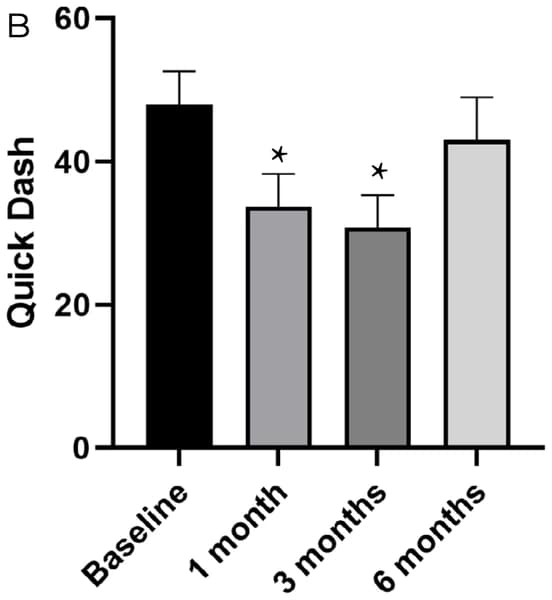
- The QuickDASH score showed significant enhancement at both the 1-month and 3-month evaluations; by the 6-month evaluation there was a recurrence of symptoms, indicating a partial loss of the initial functional gains.
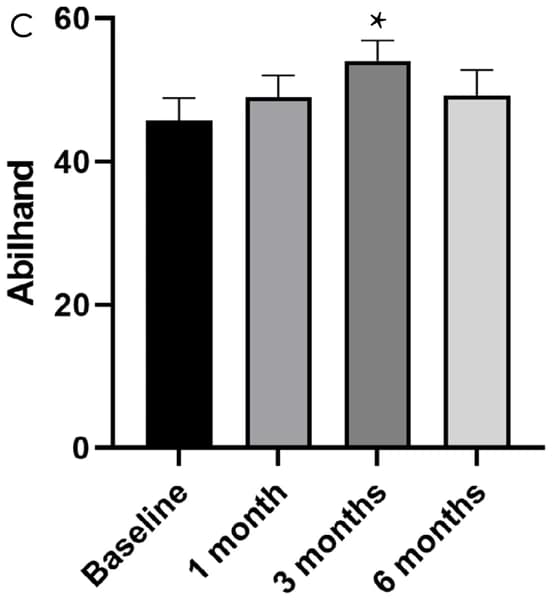
- Similar patterns were observed in the Abilhand assessment, emphasizing the need for additional intervention to sustain the achieved improvements.
- No adverse events were reported throughout the study; only two minor complications associated with the treatment were reported, but they were easily resolved without recurrence.
- patients
- 15
- years of age
- 44-65
- follow-up
- 6 months
- hydrolyzed collagen
- 5 mg/2 ml
- Indication
- Rizoartrhosis, Grade 1-2.
- Medical device
- Hydrolyzed Collagen 5 mg/2 ml. Medical device based on low molecular weight collagen peptides (LWPs). It is a ready-to-use injectable solution for the structural strengthening of connective tissues.
- Manufacturer
- Tiss’You
- Patients
- 15 patients, 44-65 years
- Investigators
- Paolo Donato Cortese, Paola Bortot
- Site
- Centro di medicina Villorba
- Location
- Treviso, Italy
- Treatment
- Intra-articular injection of Low Molecular Weight Collagen Peptides (LWPs) targeting the Trapeziometacarpal (TMC) joint; post-operatively, patients were provided with static daytime braces.
- Follow-up
- Baseline, 1 month, 3 months and 6 months
- Report
- PMCF (Post-Market Clinical Follow-up) Report #OP6PC, 19 June 2023.
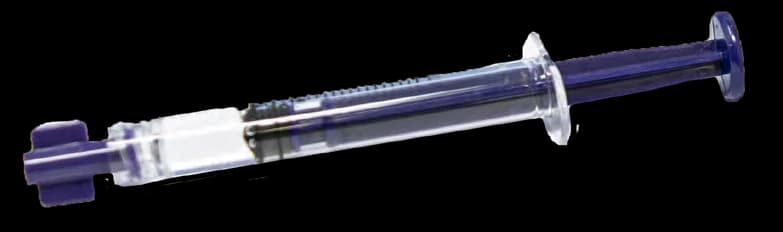
Rizoarthrosis is a degenerative joint condition affecting the base of the thumb, characterized by cartilage deterioration, joint inflammation, and pain. Current treatment options for rizoarthrosis include nonsteroidal anti-inflammatory drugs (NSAIDs) for pain management, physiotherapy, and corticosteroid injections to reduce inflammation. However, these treatments often have limitations, such as temporary pain relief, potential side effects, and limited regenerative effects on the damaged joint tissues. To address these limitations, the rationale for using injectable hydrolyzed collagen peptides emerges. Collagen peptides, with their low molecular weight and amino acid composition similar to native collagen, have shown potential in promoting tissue regeneration, cartilage protection, and reduction of pain and inflammation. As part of the treatment strategy, a static daytime brace is utilized post-collagen peptide administration. This brace serves to provide additional support and stability to the treated joint, immobilizing it during daily activities. By reducing joint movement and minimizing stress on the affected area, the brace complements the effects of collagen peptides, facilitating the healing process and enhancing overall therapeutic outcomes.
Fifteen patients, aged 44 to 65 years, diagnosed with Rizoarthrosis (grades 1-2), received intra-articular injections of Low Molecular Weight Collagen Peptides (LWPs) targeting the Trapeziometacarpal (TMC) joint. Post-operatively, patients were provided with static daytime braces for management. Patient assessments were conducted at specified intervals, including baseline, 1 month, 3 months, and 6 months. Pain levels were quantified using the Visual Analog Scale (VAS), while functional outcomes were measured using the Quick-DASH and Abilhand assessment tools.
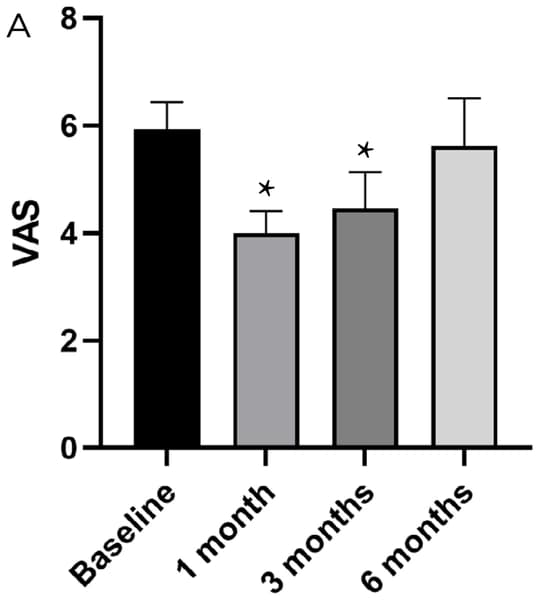
The findings demonstrated a notable decrease in the Visual Analog Scale (VAS) score (Fig. 1A), indicating reduced pain, with a 2-point drop observed at the 1-month follow-up. The pain relief remained satisfactory at the 3-month assessment; however, a slight resurgence of pain occurred at the 6-month mark, suggesting a relatively short-term effect of the treatment.
Regarding functional improvement, the QuickDASH score showed significant enhancement at both the 1-month and 3-month evaluations, indicating positive outcomes (Fig. 1B). However, by the 6-month evaluation, there was a recurrence of symptoms, indicating a partial loss of the initial functional gains. Similar patterns were observed in the Abilhand assessment (Fig. 1C), emphasizing the need for additional intervention to sustain the achieved improvements. Considering these findings, it is worth exploring strategies to optimize the long-term effects of the treatment. One potential approach could involve administering a second infiltration of hydrolyzed collagen peptides at either the 3-month or 6-month interval, aiming to reinforce and prolong the positive outcomes observed and potentially mitigate pain relapse and functional decline.
Throughout the study, no adverse events were reported, indicating that the hydrolyzed collagen peptide injections were well-tolerated. Only two minor complications associated with the treatment were reported, but they were easily resolved without recurrence. These results provide reassurance regarding the safety and tolerability of the treatment, supporting its potential as a viable therapeutic option for individuals with rizoarthrosis.
Citation
Cortese PD, Bortot P. Rizoartrhosis, Grade 1-2. PMCF Report #OP6PC. Tiss’You; 19 June 2023.